
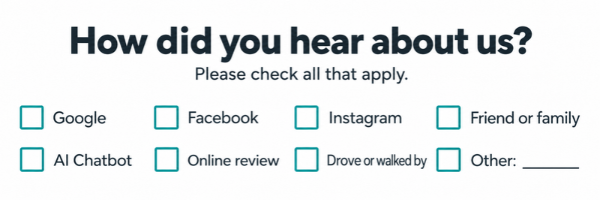
Attribution is not a black-and-white, simple story, because the customer journey isn’t straightforward or predictable. Not to mention, we make decisions with information that is both conscious and unconscious. The unconscious is one of my favorite nuances, but we’ll leave that out for now.
As much as we are able, we track conversion actions and attribution. We do this to better understand which marketing is working. For example, this is very useful with Google Ads and conversion actions taken within the attribution window. Someone could have clicked on an ad, gone to the website, and done nothing. Then later, possibly two weeks to a month later, they came back and took a conversion action on the website, and we attribute that conversion to the ad.
But was the conversion action taken solely because of that ad? We don’t know. The information is still very useful, though, because that ad was involved.
What can happen is that a business owner might not know that the person who took the conversion action also has a friend who said nice things about the business, and/or that a social media post made them feel good about the business, and/or that a particular review resonated with them, and/or that an AI chat told them even more and solidified what they’d heard (and on and on it goes).
What this means is that the ad worked, but other things worked too. The good experience a friend had worked, asking customers for reviews worked, posting on social media worked, optimizing the website for AI search worked (and on and on it goes).
Every interaction with your brand is a part of marketing, and all of it matters. Gather as much information as possible to make the best marketing decisions.
- Track conversion actions on your website so you know where they’re coming from: Google organic, paid ads, social media, AI chatbots (when someone clicks through from the chat), etc.
- Set up conversion tracking for all paid ads.
- Consider call tracking that can connect calls to where they came from.
- Review platform reports and keyword rankings.
- Ask every customer how they found you, and keep a record so you can see the patterns over time.
With as much data as possible, make the marketing decisions that will give you the best ROI.