
Keep the most important thing, the most important thing. And, for most small businesses, the most important thing is new business.
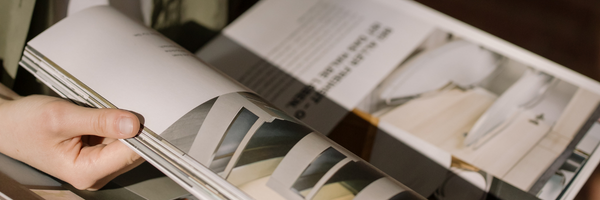
I just saw a full-page ad in a print publication that caught my eye, and I was stunned that the company would spend decent money for the ad space and leave so many important factors out of it. There was no phone number, address, website address, social proof, social channels to follow, etc. There was no action for me to take. There was a picture, a name and a logo. And right now, as I write this, a little over an hour later, I can’t tell you the name of the business or what the logo looked like. Maybe I’d notice it if I saw it again. That’s about it.
Maybe it’s part of a bigger strategy that I don’t understand or am privy to, but that’s being generous. It was a total waste of ad space and money… IMHO.
Remembering the most important thing, or the purpose of our marketing, is a worthwhile reminder. Sometimes we’re so close and in the thick of things with our own business that we forget to zoom out and refocus on the main goal.
Every piece of marketing has an objective or purpose that is part of the bigger goal of new business. All the parts belong to a strategy and matter to its success. Many of them belong to different phases of the customer journey, so the call to action for each should be different. It’s not always “Buy right now!” But a potential client should never be left wondering, “What next?” The call to action might be to follow us on social media or sign up for our newsletter. Or maybe the objective is that the experience with our brand is so good they’ll be more likely to tell others about us. But every piece needs to contribute to the bigger goal and to our business success.
And here’s why that matters more than it looks. Every piece of marketing costs something. The ad space, the design time, the attention: it all adds up to what it costs you to win one new customer. Your customer acquisition cost. Small businesses feel that number more than anyone, because there’s less room to waste. So when a piece has no next step, you haven’t just spent money. You’ve spent it to acquire nothing.
That full-page ad was proof. Decent money, caught my eye, gone from my memory in an hour. The cost was paid. Nothing was won.
We have every tool we need to make the next step easy, so use them, and follow through to the end.