
3 Things For January 3rd, 2026
Keeping Up! Bot Traffic in Google Analytics. What Makes a Great Ad?
Things Are Changing FAST!
Up until the 16th century, collective knowledge took about 1500 years to double. From 1500-1750 it took 250 years. From 1750-1900, it took 150 years. From 1900-1945 it shrunk to 25 years. By 1982, it shrunk further to 12 months and now the popular claim is 12 hours! Woah! 
Yes, I knew about these numbers, but I still used AI to quickly pull them together to write this blog. I often feel like I’m being swept away in the “atmospheric river” of fast, constant change. I’m sure you do too. Some will hunker down and hide from it all. If you have the means, I can’t blame you. But if you’re in business and most likely you are, you can’t.
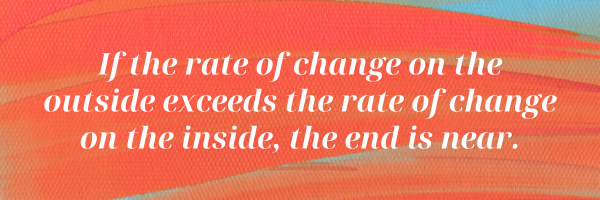
“If the rate of change on the outside exceeds the rate of change on the inside, the end is near.”
~ Jack Welch – Former CEO of General Electric
I remember with nostalgia when business owners hated the fact that there were two (or even three) yellow pages they had to put ads in. Those were the days huh?
At Strategy 3, we’re focusing on GEO (generative engine optimization) along with SEO (search engine optimization). Same, same is what we say. The way people are searching is changing and our duty is to stay up-to-date in order to help our small business clients capture their customers wherever and however they are searching.
Last month I wrote a boring blog on knowing your audience and their journey to finding you. It was boring and basic but so so important. Today as a collective we have all the information we need at our fingertips and we will go to find and research WAY before we want to talk to a real live person. This means the marketing/sales funnel has changed to be heavily weighted toward marketing (specifically content).
With SEO we preached content content content; with GEO it’s even more important, and think specific, detailed, nuanced and conversational. Need help? We’re here for you!


China & Singapore Traffic in Google Analytics
Over the past several weeks, many websites have seen an unexpected increase in traffic coming from China and Singapore — even when those regions aren’t part of their typical audience. We’ve been monitoring this across multiple sites and reviewing guidance directly from Google, and it’s clear this is part of a broader Google Analytics issue rather than anything specific to individual websites.
Here’s the important context:
- Google has confirmed this is a GA4 issue
According to Google, a wave of automated bot traffic is currently being misclassified as real visitors in Google Analytics. - These aren’t real users
The traffic is generated by bots, not people, and it’s not targeting your business or content specifically. - Blocking traffic doesn’t fully eliminate it from reports
Google has noted that even if traffic from these regions is blocked at the server or firewall level, GA4 may still record the hits because some measurement data is sent directly to Google’s systems. - Your website is not at risk
This is an analytics reporting issue only — it does not indicate a security breach, hack, or performance problem. - Google is actively working on a fix
Google’s team has acknowledged the issue and is improving bot-detection and filtering so this type of traffic stops being recorded going forward.
In the meantime, this traffic can be filtered out within GA4 so it doesn’t skew reporting or decision-making. We’re continuing to monitor updates from Google and adjusting analytics views where appropriate to keep data useful and accurate.
If you have questions about what you’re seeing in your analytics or want help filtering out this traffic, feel free to reach out. We’re always happy to help make sense of the data.


What Makes a Social Ad Actually Work?
We’ve all seen them. The social ads that make you stop mid-scroll, laugh out loud, or reach for your credit card before you’ve even realized what happened. Then there are the others, the ones you instinctively swipe past without a second thought.
So what separates the thumb-stoppers from the scroll-past-ers?
The Pattern Interrupt
The best social ads don’t look like ads at all. They look like content you’d actually choose to see. They blend into the feed while simultaneously standing out; a paradox that only works when you truly understand your audience’s behavior on each platform. A killer Instagram ad feels native to Instagram. A TikTok ad that converts speaks TikTok’s language. The medium is still very much the message.
Three-Second Test
Your ad has roughly three seconds to prove it’s worth someone’s attention. That means your hook needs to hit immediately. Not buried in the third sentence. Not revealed after a slow build-up. The most effective social ads front-load their value proposition or emotional hook before the viewer even realizes they’re being sold to.
Clarity Over Cleverness
Here’s where most brands stumble: they prioritize being clever over being clear. Wordplay and abstract concepts might win creative awards, but they rarely win customers. The ads that convert tell you exactly what you’re getting and why you should care. And they do it fast. There’s a place for wit, but never at the expense of comprehension.
The Visual-First Imperative
On social platforms, your visuals do 80% of the heavy lifting. The copy supports and amplifies what the image or video has already communicated. If your ad needs to be read to be understood, it’s already lost. The best social creative communicates instantly, even with the sound off and the copy hidden.
Social Proof in Motion
Static testimonials are table stakes. Today’s effective social ads show proof of value in real-time: user-generated content, authentic reviews, before-and-afters, or simply the visible enthusiasm of real customers. People trust people, especially when those people look and sound like them.
The Call to Action That Doesn’t Feel Like One
“Shop Now” and “Learn More” aren’t bad CTAs, but they’re predictable. The ads that drive real engagement use CTAs that feel like the natural next step in a conversation: “See if you qualify,” “Get your free audit,” “Find your match.” They invite rather than command.
The truth is, great social advertising isn’t about following a formula. It’s about understanding the psychology of interruption, interest, and action at a platform-specific level. It’s about knowing when to be bold and when to be subtle. When to educate and when to entertain. And it’s exactly what we help our clients do every single day.
Want to see what ads built on these principles can do for your brand? Let’s talk.

Meaghan McCluskey
(253) 503-0328
meaghan@strategy3degrees.com